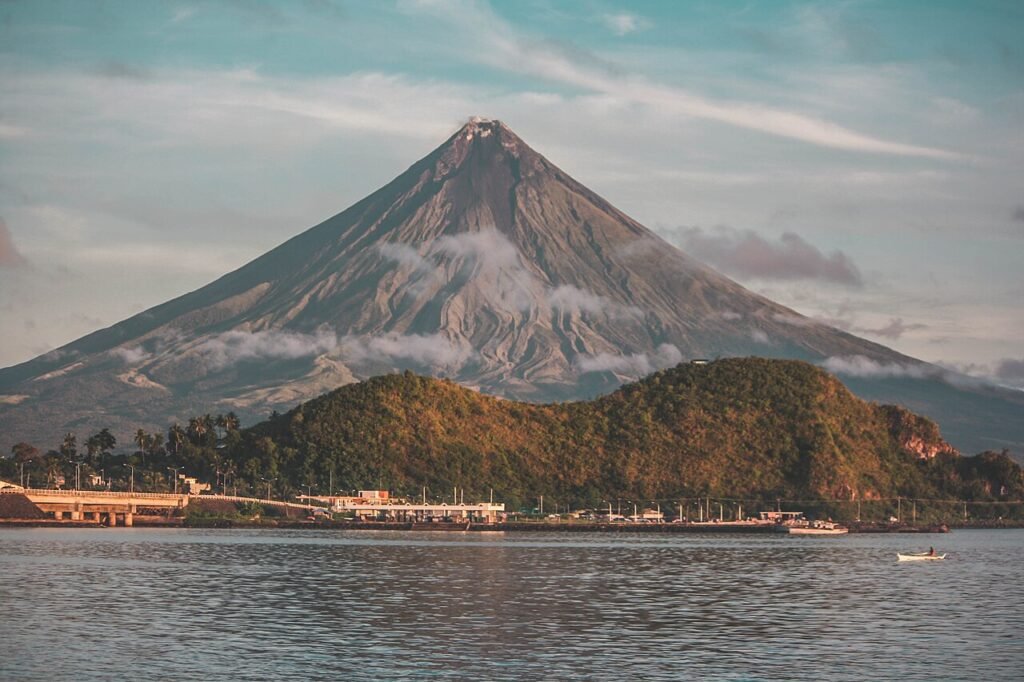
Mayon Volcano is much more famous due to its conic form which is spectacular to see, whereas life around is rather risky than beautiful. The volcano is found in Albay province located in the Philippines and it is one of the most closely observed natural features in the locality. Whereas the eruptions tend to attract attention, the threats posed by weather tend to pose equal or even more hazards to the surrounding populations. Volcanic deposits during tropical storms can also be converted into destructive flows by heavy rain in a very short period of time.
In the times of high rainfall, the slopes of the Mayon Volcano lose their ash, rocks, and eruption materials that are of an older age. This material mixes with water and forms rapid moving mudflows called lahars. The occurrence of these flows does not require an active eruption to be active. Rain by itself is sufficient, and that is why storms are particularly dangerous to the inhabitants of river channels and drainage roads around the volcano.
How Tropical Storms Increase Danger Around Mayon Volcano
Strong winds and extensive rainfall are usually experienced in tropical storms that occur around the Philippines. When tropical storm Nokaen passed across the surrounding waters, the authorities had alarmed that the rainfall amounts would be between 100 and 200 millimeters in the localities around Mayon Volcano. That is a large volume of rainfall that can cause severe ground movements along volcanic slopes.
The rainwater flows into the loose deposits that were formed by the recent and the previous volcanic activities. After the saturation, the mixture is pushed down the river and stream using the force of gravity. These turbid streams travel with speed and they are capable of transporting large stones that are able to destroy buildings, roads, and bridges. Communities that are located long distances away, even though they are not drained by the crater, may be affected.
How Rainfall Transforms Slopes Around Mayon Volcano
Only rain can cause hazardous situations in the area of Mayon Volcano. Newer activity has produced fresh deposits that are loose and fine such that water is able to mix rapidly with ash and rock. Mature deposits may wear away even though they may have been hardened by time, when subjected to continuous rain.
These resources pass through the natural drainage channels. Rivers and channels serve as channels through which debris finds its way to meet low areas. This is the reason why rainfall warnings are declared at the time a volcanic activity is not visible.
| Rainfall Intensity | Effect on Slopes | Risk Level |
| Light rainfall | Minor surface runoff | Low |
| Moderate rainfall | Stream swelling | Medium |
| Heavy rainfall | Lahar formation | High |
| Prolonged rainfall | Widespread flooding | Severe |
Rainfall impact assessments help authorities decide when to restrict access to danger zones. These decisions reduce exposure during critical periods.
Mayon Volcano Lahars Explained Clearly
Lahars are high velocity mud, water, ash, and rock flows. In the Mayon Volcano area, they are created very fast during storms and they are transported by rivers. Their velocity and density are what makes them one of the most hazardous secondary volcanic hazards.
Other lahars are still hot because of being in contact with recently deposited material. This poses a further threat of burns and severe injury. Since lahars occur in predictable pathways, the communities that are close to rivers are most vulnerable.
Common Features of Lahars
- Rapid movement similar to flash floods
- Heavy debris capable of damaging structures
- Long travel distances beyond volcanic slopes
These characteristics explain why evacuation orders are often issued early during storms.
Impact on Communities Near Mayon Volcano
Societies around Mayon Volcano are constantly shaken during storm seasons. Volcanic activity has already caused thousands of residents to be displaced. Down pour makes the living situation in evacuation centers difficult, which puts a strain on resources and facilities.
Storms are also a problem to the emergency response teams. The roads are flooded thus slowing down access whereas the ground is unstable, so movement is restricted. That is why the authorities recommend early relocation instead of last-minute evacuation.
Community Challenges During Storm Events
| Issue | Resulting Impact |
| Flooded access roads | Delayed rescue efforts |
| Overcrowded shelters | Health and sanitation risks |
| Continuous rain | Extended displacement |
Planning for these challenges has become part of daily life for many families in the region.
Monitoring Systems Around Mayon Volcano
The monitoring of Mayon Volcano entails the collaboration of the weather agencies and the volcano observatories. There are real-time data in rain gauges, river sensors, slope checkup. These instruments can be used to forecast the development of lahars.
The frequency of changing the alerts is based on the fact that the conditions may vary even in the span of hours. The people living there are encouraged to trust the official signs instead of physical ones. This has proven that early warnings are a major way of minimizing casualties.
Conclusion:
Despite the eruptions, Mayon Volcano continues to have a strong impact on the region around it with regard to their interaction with heavy rainfall as well. Lahars triggered by a storm still remain a significant threat to the community, infrastructure, and livelihood. Preparation, awareness and early response are the best tools of defense against Mayon Volcano.
Also Read About :- Vande Bharat Express