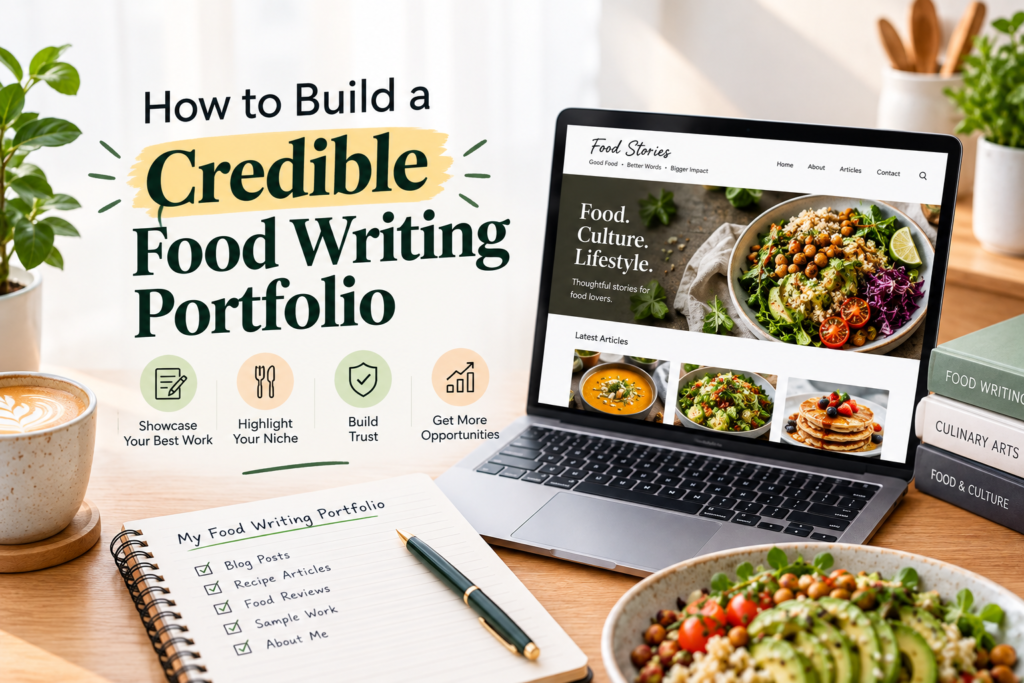
Food writing can do more than describe a good meal. It can help readers understand nutrition, learn practical cooking skills, explore food traditions, and make informed choices about what they eat. For new writers, creating useful, trustworthy articles is also a way to build a portfolio and develop a professional voice. A thoughtful approach matters: readers need clear information, while editors need work that is accurate, focused, and suited to their audience.
Choose a Clear Focus
“Food” is a broad subject, so it helps to begin with a particular angle. You might write about affordable family meals, kitchen skills for beginners, regional food culture, food safety, or the science behind everyday ingredients. A defined focus makes it easier to select topics and show editors what you can contribute.
Consider who you want to reach. A piece for busy parents may need quick steps and accessible ingredients, while an article for curious home cooks could explain technique in more depth. The intended reader should shape the language, examples, and level of detail.
Make Accuracy Part of Your Process
Food articles often touch on health, nutrition, allergies, and food handling. These subjects deserve care. Check factual claims against dependable sources, and distinguish established guidance from personal experience or emerging research. Avoid presenting a single ingredient or eating pattern as a guaranteed solution to a health concern.
When discussing nutrition or medical issues, use precise language and make clear when readers should seek advice from a qualified professional. Practical details matter too: test recipes where possible, check cooking temperatures against reliable food-safety guidance, and make quantities and steps easy to follow. Accuracy builds reader confidence and gives editors a reason to trust your work.
Build Samples Before You Pitch
A portfolio does not need to be large to be useful. Start with two or three polished samples that demonstrate different strengths, such as a recipe, an explanatory article, and a short reported piece. Each sample should have a clear purpose, a strong opening, useful headings, and a careful edit for spelling and consistency.
If you do not yet have published work, create sample articles on your own site or in a simple document you can share. Label unpublished work honestly. Focus on showing how you organize information and serve readers rather than trying to cover every food topic at once.
Find Suitable Places to Publish
Look for publications whose readers and editorial style match your subject. A community cooking site may welcome accessible recipes, while a wellness publication may expect careful sourcing and a measured approach to nutrition. Read several recent articles before pitching. This helps you understand the publication’s tone, length, and preferred format.
Directories can help writers identify possible outlets, but a listing is only a starting point. For example, food guest posting websites and blogs can help you find publications that accept contributions. Before sending a pitch, check each site’s current submission instructions, audience, editorial standards, and whether its topics genuinely fit your expertise.
Write a Pitch Editors Can Assess Quickly
A concise pitch gives an editor enough information to judge the idea without requiring a long exchange. Include a working headline, the central point, the intended reader, and a few details about what the article will cover. Explain why the topic is timely or useful for that publication, and provide links or attachments to relevant samples if requested.
Keep the proposal specific. “An article about healthy eating” is too broad to evaluate. A more focused idea might explain how to plan a week of balanced lunches on a limited budget, with practical examples and appropriate sourcing. Do not send a full article unless the publication asks for one.
Develop a Reliable Freelance Routine
Finding paid assignments takes persistence as well as writing ability. Set a realistic schedule for researching outlets, preparing pitches, and following up politely. Track submission dates and responses so you do not contact the same editor repeatedly or lose track of an opportunity. If you are new to client work, Osdire’s guide to getting a first freelance writing job offers a structured way to think about clear services, strong samples, and a focused search.
Once an editor responds, confirm the scope before starting: deadline, length, fee, revision expectations, and whether images or recipe testing are required. Put agreed details in writing. Meeting deadlines and communicating early when a problem arises are simple habits that help build long-term working relationships.
Keep Improving Your Work
After publication, review the finished article and consider what worked. Did readers respond to the practical details? Did the editor ask for a different structure? Use feedback to improve the next piece, while keeping your own research standards intact. Over time, a focused portfolio and a consistent process can help you move from occasional samples to regular assignments.
Conclusion
Credible food writing combines curiosity with care. Choose a defined subject, verify important claims, create useful samples, and pitch publications whose audiences fit your work. By treating readers’ needs and editors’ requirements with equal attention, new writers can build a portfolio that is both informative and ready for professional opportunities.