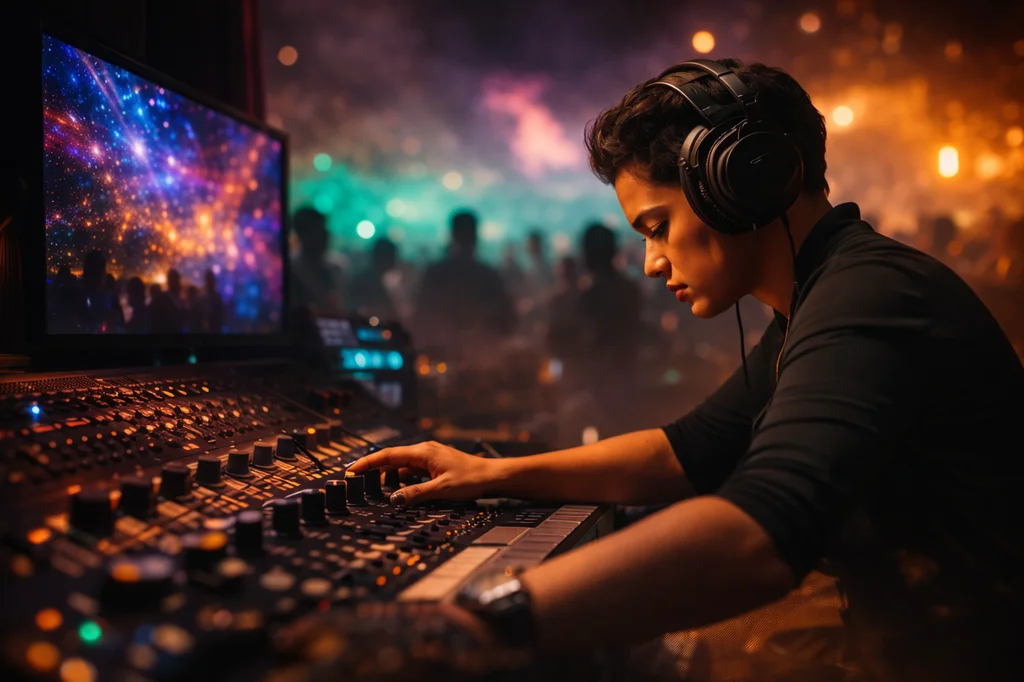
Human emotions rarely remain still. They rise, slow down, and shift throughout the day in ways that often feel natural but difficult to explain. Most individuals experience these emotional transformations, but they are unaware of the reason it takes place and how it can relate to normal life. This emotive flow can be only explained using the term of pulsamento that is the rhythm of human sentiments, responses, and the knowledge of emotions.
Instead of taking emotions as a random or uncontrollable aspect, it provides a systematic means of knowing how emotions flow. It describes the reason as to why some moments are tough and some are soothing or thought-provoking. The rhythm can be found in normal life, and some areas such as talking, listening to music, body movement and alone time. Once individuals are acquainted with pulsamento, they will be in a better position to accept emotional patterns rather than defying them.
This article explains what pulsamento is, where it comes from, and how it influences emotions, behavior, and daily life. Each section expands the idea gradually, making it easier to understand how emotional rhythm shapes human experience.
What is Pulsamento?
Pulsamento is the natural flow of the human emotions, their variations over time. It describes how emotions build up, peak and subside rather than coming out of the blue and vanishing without a trace. Emotions are more of a flow, which resembles the rhythm of the body such as breathing or heartbeat and it is this emotional rhythm that it captures.
It has a root in the Italian word pulsare, that is to pulse, beat. This source is indicative of the notion that emotions act like waves and not fixed states. There are various emotional tempos that lead to happiness, sadness, excitement, calmness and pulsation which explains the occurrence of these variations in a natural way.
The importance of pulsamento is that it removes the emotional confusion with clarity. People do not ask themselves why emotions change, but learn to see how emotions change. This change enhances emotional awareness and eliminates unjustifiable stress due to emotional resistance.
The Origins of Pulsamento in Human Experience
Pulsamento was developed on the basis of old observations regarding emotional conduct. Philosophers, artists and other thinkers in different cultures also realized that emotions are act like rhythms rather than reactions. They noted that the emotions are repetitive and predetermined to form perception and the problem is handled by emotion before logic sets in.
Emotions were commonly equated with vibrations/waves in early philosophical thought. These philosophers were of the opinion that emotions had energy that influenced the human interaction and decision-making. This concept then over-time grew out of theory and could be seen, in art, music, and narration, where rhythm is central to the influence of emotion.
The contemporary concept of pulsamento links these notions to the normal lives. Emotional rhythm is not regarded as something abstract and nowadays it is perceived on a daily basis. It is the representation of inner feelings and outer emotional space.
How Pulsamento Shapes Human Emotions?
Feelings are seldom presented unexpectedly. Rather, they develop slowly, get intense and stabilize. It describes this flow of emotions by demonstrating that all emotions have their own rhythm. When it comes to the excitement, it comes and goes in short, whereas sadness is slow and lasts.
This emotional rhythm is felt by the human body. Emotional changes are frequently accompanied by changes in breathing, heart rate, posture and energy. An increased emotional rhythm can result in motivation and creativity, whereas, a slower emotional rhythm facilitates reflection and emotional restoration.
People learn pulsamento and, therefore, cease to consider emotions as problems. They start to see the emotions as the signals that move in natural circle. This awareness makes people act rationally instead of in a response manner.
Pulsamento in Everyday Emotional Experiences
It occurs in everyday life though we do not notice. One of the brightest ones is music. Slow tunes tend to be relaxing whereas high tempos make one more alert and energetic. These emotional reactions are due to the fact that music is in line with emotional rhythm.
Pulsamento also is reflected in conversations. There are free-flowing and engaging discussions and there are tense or uncomfortable ones. Emotional pacing determines the manner in which the words are traded and comprehended. Even silence has a rhythmic emotional expression, and it usually speaks louder than words.
Even simple everyday actions are also emotional rhythm. Depending on emotional pacing, walking, cooking or cleaning will either be peaceful or overwhelming. It reveals the reason why the same action may be experienced differently on other days.
Pulsamento in Nature and Physical Movement
There are good examples with nature of pulsamento through patterns of repeat. Waves up and down, the wind to and fro, leaves rustle in their regular swings. Such natural patterns have an effect on the emotional stability and tend to have a soothing effect on the mind.
Emotional rhythm is also in tandem with bodily rhythm through physical movement. Such exercises as jogging, stretching, or dancing tend to bring clarity to emotions as they move along with the body. Such correspondence eases the emotional stress and enhances mood.
The relationship between physical rhythm and emotional rhythm illuminates on the way in which it aids equilibrium. When the movement and the emotion are consistent, emotional awareness increases and grows steadier.
Pulsamento in Social and Shared Environments
This rhythm is observed in shared emotional spaces. Emotions tend to be transmitted fast in the social context. When a group laughs, it produces a unified energy, whereas silence in a group during a grieving situation indicates that people experience unison in emotions. These experiences illustrate its emotional bonding of people.
Knowledge in this platform enhances communication and compassion. Emotional rhythm helps one to feel natural in conversations and interesting. Understanding can go wrong when there is a break in rhythm. Emotional consciousness assists in returning to a normal state.
The table below explains how pulsamento appears in social situations.
| Social Situation | Emotional Rhythm Effect |
| Group laughter | Shared emotional energy |
| Deep conversation | Emotional alignment |
| Conflict | Disrupted rhythm |
| Quiet support | Slow emotional pacing |
Recognizing these patterns allows people to respond with patience rather than frustration.
Emotional Awareness Through Pulsamento
It enhances emotional awareness in that it assists individuals to view emotions without criticism. Rather than being in an attempt to curb feelings, people study to identify at which stage they are in the emotional cycle. This knowledge minimizes the emotional fatigue and stress.
When individuals decide to know this rhythm, emotional intelligence improves. They are improved in their ability to identify emotional indicators in others and themselves. Such an insight facilitates effective communication and emotional strength.
The table below outlines how emotional awareness improves with pulsamento understanding.
| Awareness Level | Emotional Response |
| Low awareness | Reactive emotions |
| Moderate awareness | Emotional recognition |
| High awareness | Calm emotional response |
This progression shows how emotional rhythm awareness leads to emotional stability.
Strengthening Emotional Balance Using Pulsamento
Balance of emotions is not attained by escaping emotions. It is a result of letting emotions run their course. It teaches tolerance as opposed to resistance and this makes feelings settle by themselves.
Human beings who are aware of pulsamento undergo less emotional extremity. They permit pleasure without fixation and grief without trepidation. Such moderation helps to decrease burnout and emotional exhaustion.
Emotional rhythm is reinforced through practices of awareness existing daily. Simple techniques are not needed in these practices and rely on attention and patience.
Common Misunderstandings About Pulsamento
Emotional rhythm is misunderstood by many people as it is not told properly most of the time. Such misconceptions tend to result in emotional rejection, perplexity, or avoidable tension. It is better to explain these concepts to allow people to be more understanding and patient with their emotions.
1. Emotional rhythm is often mistaken for mood swings
Others assume that emotional movement is instability yet this is not the case as it does not take into account the natural flow of emotions. What may seem like a change of mood is usually a natural reaction to changing experiences. This rhythm can be recognized to identify natural emotional movement and emotional imbalance.
2. Emotional control is wrongly linked to suppression
The other myth is that emotional management is the act of pushing the feeling. As a matter of fact, suppression does not enhance emotional rhythm but interrupts it. Emotional flow is also better when the emotions are respected and left to run their course.
3. Emotional consistency is incorrectly seen as emotional strength
Emotional intelligence demands flexibility at times and praising emotional stability is sometimes said to be a good thing. The only way to be strong is to recognize emotional changes and not struggle with them. It tells the reason why emotional movement is helpful in the long-term balance.
Long-Term Impact of Living With Pulsamento Awareness
Pulsamento awareness makes life different in the lives of people. Both moods of the emotional experience are significant, not overwhelming. Individuals no longer want to pursue unremitting happiness but appreciate emotional stability.
Such knowledge helps to give strength in hard situations. Emotional rhythm is easier to negotiate loss, change and uncertainty. Emotional consciousness turns out to be not a problem but an asset. With time, self-understanding and emotional bond between oneself and other people are enhanced.
Conclusion:
Pulsamento is used to describe the emotional rhythms that influence human experience in normal life. When one learns about the process of emotion elevation and stabilization, he/she gets clarity and emotional equilibrium. This consciousness enhances relations, communication and self-understanding. Pulsamento awareness does not demand change and effort to live with. It needs to be addressed and accepted. When emotional rhythm is addressed, life becomes more solid, interconnected and emotionally significant.
Also Read About :- Hippo Chips Story: Rise, Popularity